积木盒测试
注意!该文章为贵州三易医疗器械有限公司原创整理编辑,不经过本公司书面同意,不得以任何方式,包括但不限于电子、纸质的方式进行复制、传播及转载。原始发布时间:2026年8月29日。
积木盒测试概况
积木盒测试(Box and Block Test,BBT)测量单侧粗大手灵活性,是一种快速、简单且花费低廉的测试,可用于包括脑卒中患者在内的广泛人群。原始版本由Jean Hyres和Patricia Buhler于1957年开发,后经E. Fuchs和P. Buhler修改为当前版本,1985年由Mathiowetz、Volland、Kashman和Weber建立了常模数据。
积木盒测试的目的
积木盒测试旨在通过计数规定时间内单手转移的木块数量,测量单侧粗大手动灵活性,评估和监测脑卒中患者上肢功能的恢复。
积木盒测试的测试项目与分量表
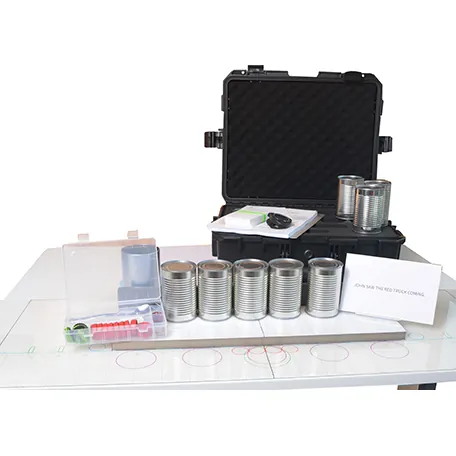
积木盒测试由一个被隔板分为两格的木盒和150个木块组成,无分量表。施测时要求患者在60秒内一次一个地将木块从盒子的一格尽可能多地转移到另一等大格子。盒子应纵向放置于患者正中线处,装木块的一格朝向被测手。为练习并记录基线分数,测试应从未受累上肢开始。此外,每侧开始时允许15秒的试验期。试验前在给出标准化指导语后,应告知患者转移木块时指尖必须越过隔板,掉到盒外的木块无需捡起。
积木盒测试的施测规则
测试从未受累上肢开始,每侧先进行15秒试验期。标准化指导语后提醒患者指尖必须越过隔板、掉落盒外的木块无需捡起。正式测试60秒。
积木盒测试的评分方法
以患者60秒内从一格转移到另一格的木块数量计分,分数越高表示手动灵活性越好。施测过程中评估者应注意患者指尖是否越过隔板,只有满足该条件时木块才被计数。若一次转移两个木块,只计一个。越过隔板后掉出盒外的木块,即使没有落入另一格,也应被计数。
常模数据:健康男性成人(20-80岁)右手平均77块(标准差11.6),左手平均75块(标准差11.4);健康女性成人(20-80岁)右手平均78块(标准差10.4),左手平均76块(标准差9.5);60岁以上健康男性61-70块,60岁以上健康女性63-76块。测试得分与年龄呈负相关,即平均得分随年龄增长而下降。
积木盒测试的测试时间
施测需2至5分钟。
进行积木盒测试之前需要进行培训吗?
通常无需培训。
积木盒测试需要什么样的设备?
标准化设备包括:
- 木盒:尺寸53.7厘米x 25.4厘米x 8.5厘米,隔板置于盒子中间,将其分为各25.4厘米的两个容器
- 150个木制立方体,尺寸2.5厘米
- 秒表
积木盒测试适合哪些患者群体使用?
可用于脑卒中患者,但不限于此人群。不应用于上肢严重受损的患者和严重认知障碍的患者。测试无官方翻译版本,提供给患者的具体指导语为英语,瑞典、加拿大法语区、意大利和德国的同行评审研究显示临床人员可能在使用自制的指导语翻译。施测快速简单,但需要标准化设备。
积木盒测试的心理测量学特性
信度方面:重测信度方面,一项34例上肢感觉运动受损老年患者(其中13例脑卒中)间隔1周重评的研究显示,右手和左手组内相关系数分别为0.97和0.96(优秀);一项23例上肢瘫痪患者(脑卒中、多发性硬化或颅脑损伤)间隔1周重评最受累手臂的研究显示组内相关系数0.96、相关系数0.97(优秀)。评定者间信度方面,一项26名健康年轻女性由两名评定者同时独立评估的研究显示右、左手Pearson相关系数分别为1.00和0.99(优秀);一项44例上肢瘫痪患者最受累手臂录像后由两名评定者独立评分的研究显示组内相关系数0.99、相关系数0.99(优秀)。内部一致性无研究检验。
效度方面:同时效度方面,一项59例脑卒中患者的研究显示,本测试与动作研究臂测试和九孔插柱测试在治疗前相关系数为-0.55至-0.80、治疗后为-0.57至-0.71(良好至优秀)。预测效度方面,一项55例急性脑卒中患者的研究显示,与其他上肢表现测试相比,本测试在脑卒中后1周施测时是脑卒中后5周上肢功能的最佳预测因子。结构效度方面:一项研究与明尼苏达操作速度测试相关r=0.91(优秀);一项104例上肢受损老年患者的研究显示与动作研究臂测试相关r=0.80(优秀)、与功能自主性测量系统相关r=0.47和0.51(良好);一项56例上肢瘫痪患者的研究显示与动作研究臂测试相关r=0.95、与Fugl-Meyer评估运动功能分相关r=0.92(优秀),与大脑半球卒中量表相关r=-0.67(优秀),与Fugl-Meyer被动关节活动分相关r=0.43、与Ashworth量表相关r=-0.38(良好),与Fugl-Meyer感觉分相关r=0.28、与修改版巴塞尔指数相关r=0.04(差)。已知组效度、地板/天花板效应和敏感性/特异度无研究检验。
反应性方面:一项50例急性脑卒中患者的研究显示,本测试在上肢表现测试中对检测变化最敏感,标准化反应均数为0.8(大);一项59例亚急性脑卒中患者的研究显示,本测试、动作研究臂测试和九孔插柱测试的标准化反应均数分别为0.74、0.64和0.79(均中等),对手灵活性变化敏感。
积木盒测试的版本
无替代版本。
积木盒测试的参考文献
- American Guidance Service. The Minnesota Rate Manipulative Tests. Examiner's manual. Circle Pines, (MN): Author; 1969.
- Adams, R.J., Meador, K.J., Sethi, K.D., Grotta, J.C., & Thomson, D.S. (1986). Graded neurologic scale for the use in acute hemispheric stroke treatment protocols. Stroke 18, 665-669.
- Ashworth, B. (1964). Preliminary trial of carisoprodol in multiple sclerosis. Practitioner, 192, 540-542.
- Broeren, J., Rydmark, M., Bjorkdahl, A., & Sunnerhagen, K.S. (2007). Assessment and training in a 3-dimensional virtual environment with haptics: a report on 5 cases of motor rehabilitation in the chronic stage after stroke. Neurorehabilitation & Neural Repair, 21(2), 180-189.
- Collin, C., Wade, D.T., Davies, S., & Horne, V. (1988). The Barthel ADL Index: a reliability study. International Disability Study, 10, 61-63.
- Cromwell, F.S (1965). Occupational therapists manual for basic skills assessment: primary prevocational evaluation. Pasadena, (CA): Fair Oaks Printing; 29-31.
- Daley, K., Mayo, N.E., Wood-Dauphinee, S., Danys, I., & Cabot, R. (1997). Verification of the Stroke Rehabilitation Assessment of Movement (STREAM). Physiotherapy Canada, 49, 269-278.
- Dannenbaum, R.M., Michaelsen, S.M., Desrosiers, J., & Levin, M.F. (2002). Development and validation of two new sensory tests of the hand for patients with stroke. Clinical Rehabilitation, 16(6), 630-639.
- Desrosiers, J., Bravo, G., Hébert, R., Dutil, É., & Mercier, L. (1994). Validation of the box and block test as a measure of dexterity of elderly people: reliability, validity and norms studies. Archives of Physical Medicine and Rehabilitation, 75, 751-755.
- Desrosiers, J., Rochette, A., Hebert, R., & Bravo, G. (1997). The Minnesota manual dexterity test: reliability, validity and reference values studies with healthy elderly People. Canadian Journal of Occupational Therapy, 64(5), 270-276.
- Finch, E., Brooks, D., Stratford,P.W, & Mayo, N.E. (2002). Physical Outcome Measures: A guide to enhance physical outcome measures. Ontario, Canada: Lippincott, Williams & Wilkins.
- Fugl-Meyer, A.R., Jääskö, L., Leyman, I., Olsson, S., & Steglind, S. (1975). The post-stroke hemiplegic patient 1. A method for evaluation of physical performance. Scandinavian Journal of Rehabilitation Medicine, 7, 13-31.
- Hébert, R., Carrier, R., & Bilodeau, A. (1988). The functional autonomy measurement system (SMAF): description and validation of an instrument for the measurement of handicaps. Age Ageing, 17, 293-302.
- Heller, A., Wade, D.T., Wood, V.A., Sunderland, A., Hewer, R., & Ward, E. (1987). Arm function after stroke: measurement and recovery over the first three months. Journal of Neurology, Neurosurgery & Psychiatry, 50(6), 714-719.
- Higgins, J., Mayo, N.E., Desrosiers, J., Salbach, N.M., & Ahmed, S. (2005). Upper-limb function and recovery in the acute phase poststroke. Journal of Rehabilitation Research & Development, 42(1), 65-76.
- Jebsen, R.H., Taylor, N., Trieschmann, R.B., Trotter, M.J., & Howard, L.A. (1969). An objective and standardized test of hand function. Archives of Physical Medicine and Rehabilitation, 50, 311-319.
- Kellor, M., Frost, J., Silberberg, N., Iversen, I., & Cummings R. (1971). Hand strength and dexterity. American Journal of Occupational Therapy, 25, 77-83.
- Lin, K-C., Chuang, L-L., Wu, C-Y., Hseih, Y-W. & Chang, W-Y. (2010). Responsiveness and validity of three dexterous function measures in stroke rehabilitation. Journal of Rehabilitation Research and Development, 47(6), 563-572.
- Lyle, R.C. (1981). A performance test for assessment of upper limb function in physical rehabilitation treatment and research. International Journal of Rehabilitation Research, 4, 483-492.
- Mathiowetz, V., Volland, G., Kashman, N., & Weber, K. (1985-1). Adult norms for the box and block test of manual dexterity. American Journal of Occupational Therapy, 39, 386-391.
- Mathiowetz, V., Weber, K., Kashman, N., & Volland, G. (1985-2). Adult norms for the nine hole peg test of finger dexterity. Occupational Therapy Journal of Res, 5, 24-33.
- Mathiowetz, V., Kashman, N., Volland, G., Weber, K., Dowe, M., & Rogers, S. (1985-3). Grip and pinch strength: normative data for adults. Archives of Physical and Medicine Rehabilitation, 66, 69-72.
- Mercier, C. & Bourbonnais, D. (2004). Relative shoulder flexor and handgrip strength is related to upper limb function after stroke. Clinical Rehabilitation, 18(2), 215-221.
- Platz, T., Pinkowski, C., van Wijck, F., Kim, I.H., di Bella, P., & Johnson, G. (2005). Reliability and validity of arm function assessment with standardized guidelines for the Fugl-Meyer Test, Action Research Arm Test and Box and Block Test: a multicentre study. Clinical Rehabilitation, 19(4), 404-411.
- Schneider, S., Schonle, P.W., Altenmuller, E., & Munte, T.F. Using musical instruments to improve motor skill recovery following a stroke. Journal of Neurology, 254(10), 1339-1346.
- Tiffin, J. (1968). Purdue Pegboard Examiner Manual. Chicago, USA: Science Research Associates.

 简体中文
简体中文